
The Water Under Our Feet
What is a catchment area
(source: Greater Wellington Regional Council)
Water flows to us from a water catchment area. That’s a basin-shaped area of land that collects and moves water, often bordered by hills or mountains. Water enters the catchment through precipitation, such as rain or snow, and then moves across the surface or subsurface until it drains into a stream or river.
In the Wellington Region, these areas are called whaitua, which is a Te Reo Māori word that means "space" or "catchment".
Where does our drinking water come from?
(source: Wellington Water)
The water we drink has to be collected and treated. Drinking water supplied to the Wellington metropolitan area comes from three sources:
Hutt River/Te Awakairangi
Combined flow of the Wainuiomata and Orongorongo rivers
Waiwhetu Aquifer - a natural underground reservoir beneath the Hutt Valley that is fed by river water seeping down into the ground
What is the role of our streams?
(source: Wellington City Council)
Streams provide habitat and food for hundreds of plants and animals – from tiny algae to 100-year-old longfin eels – and have delicately balanced ecosystems. If healthy, the banks of the streams themselves (riparian areas) improve water quality, provide habitat and shelter for fish, and lower the water temperature. Riparian areas also filter out sediment and pollutants and increase bird and insect life.
The diversity of small macroinvertebrates such as insects, worms, and snails found in streams tell us a lot about the health of our freshwater ecosystems….
… Streams are both homes and highways for fish. Nearly all of New Zealand’s freshwater fish species migrate between freshwater and the sea during their lives as an important part of their breeding cycle. The loss, damaging, or blocking of streams – whether rural, urban, or piped– risks the extinction of fish in that stream. Sometimes this is in the form of dams and culverts. Pest and introduced fish species threaten our indigenous flora and fauna in waterways, lakes and wetlands. Perch and trout, for example, can reduce water quality and prey on native fish and insects.
What can pollute our streams?
Many Wellingtonians don't realise that our stormwater drains - the ones in our gutters - flow into our streams and sea. So that casually tossed cigarette butt or bottle top etc into the gutter is going straight into the sea; Once there, that cigarette butt will breakdown, release its toxins, and become an accidental, and possibly fatal, meal for a fish or bird. And that bottle top will become tiny bits of microplastics that you will see in every handful of sand on your local beach.
How many freshwater streams run under our feet?
(source: Stuff)

Paul Blaschke, an environmental consultant and an expert in stream catchments, roughly estimates there may be as much as 700km of culverted streams within the Wellington city limits, compared to as little as 60km of open streams.
What streams run under our feet in the inner city?

The Waimāpihi Stream

The Wellington Museum team has produced this video which follows the path of the Waimāpihi Stream.
Waitangi Stream


This Scoop article tells the story of the Waitangi Stream which ends its journey at these humble locations without any signage or celebration. Perhaps we could make that happen?
The Kaiwharawhara Stream
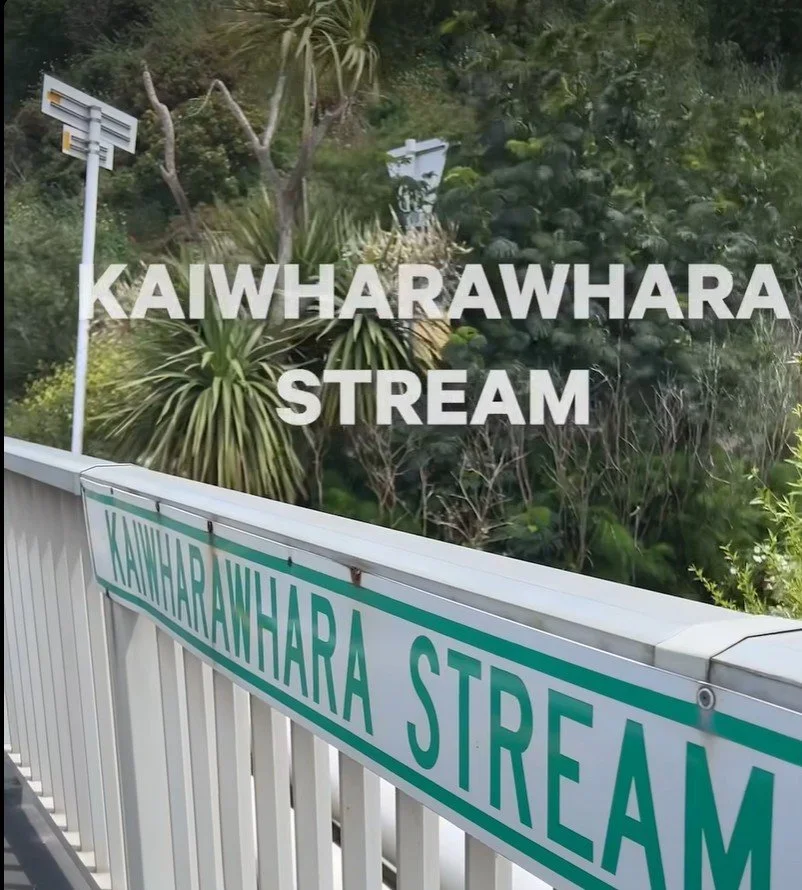
This is another little video, created by Wellington Museum for its ‘Telling Tales’ series. It follows the path of the Kaiwharawhara Stream, and includes its history, including the Rainbow Hotel.
The Kumutoto Stream
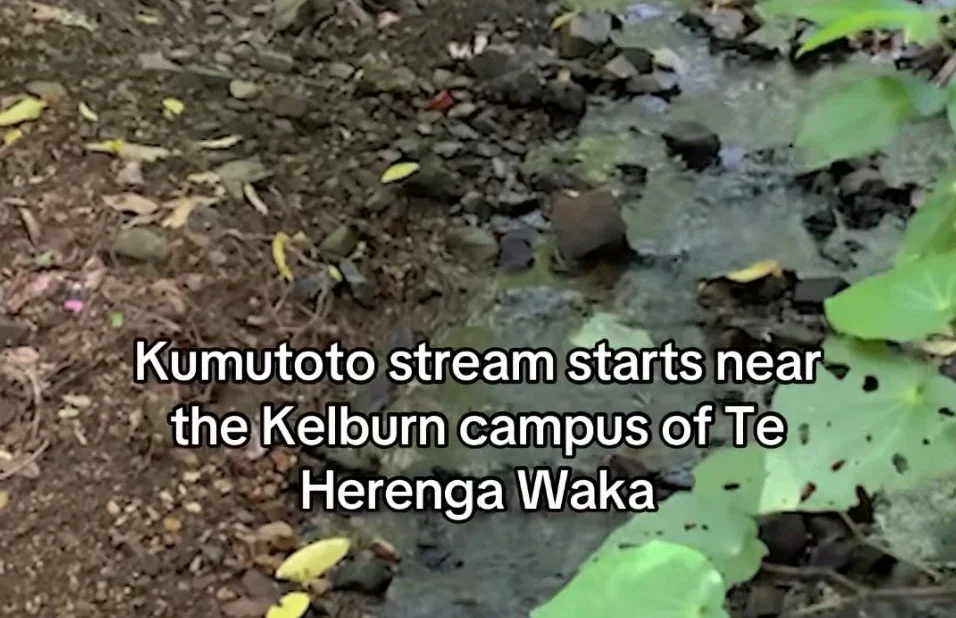
This little video, created by Wellington Museum for its ‘Telling Tales’ series, tells the story of the journey of the Kumutoto Stream as it passes under our feet on its way to the harbour.
Pipitea Stream
The Wellington Museum team has also produced this video which follows the path of the Pipitea Street.
________
Something new to explore in 2026!
Urban streams are often hidden from sight though they play many important roles.
Do you know where your nearest stream is and where it flows?
This site helps you answer those questions.
Besides carrying water from rooftops and roads to the sea, streams provide corridors for wildlife to move along though for aquatic species we often put significant barriers in their way. Those barriers include structures such as pipes and contamination such as sewerage overflows and chemical spills (yes these can be intentional spills such as pouring house cleaning products down the drain).
So, enjoy exploring where your water flows, how we are connected to our urban stream networks and who your upstream and downstream neighbours are.