Te Matapihi ki te Ao Nui
Te Matapihi ki te Ao Nui (The Window to the Wider World), is Wellington’s Central Library.
After earthquake strengthening, it reopened on 14 March 2026 as a library of the 21st century.
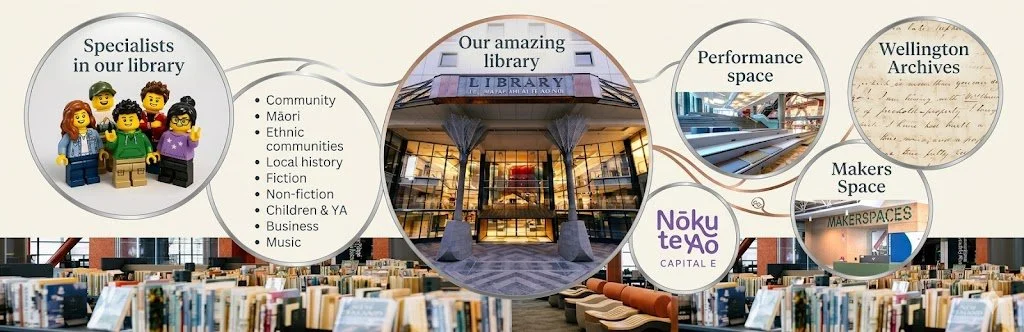
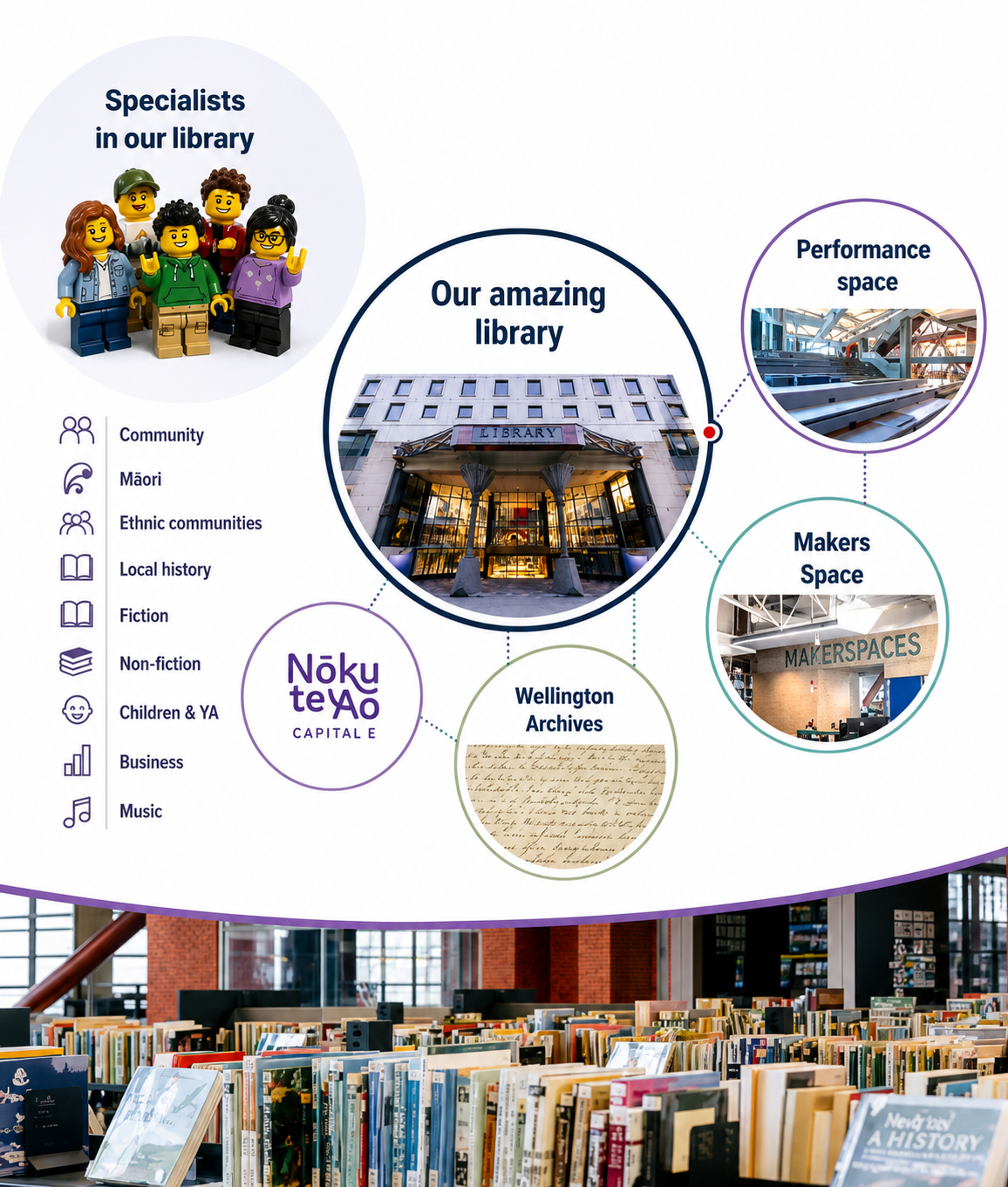
It still has books and librarians, but it also has a Makerspace with 3D printers, an audio recording area, a greenscreen video area, plus there’s a performance space (‘the bleachers’), a children’s play space, and Nōku te Ao/Capital E, which is a remarkable learning environment for school children.
And, it is now also the home of the Wellington City Archives.
But let’s not forget this too - there’s a great cafe on the ground floor!
And something more to know
A great library isn’t just about books and places, it’s also about expertise. In Te Matapihi is a team of experts with in-depth knowledge.
Wondering about starting up a new business and need help to navigate the process - ask the team!
Looking for the name of an obscure piece of music composed by a local musician - ask the team!
Researching a piece of local history - ask the team.
Wellington - how good is it that we have our Central Library back bigger and brighter, but also that we have such human expertise available to us too.
__________
Exploring the design
Many design elements Inside Te Matapihi ki te Ao Nui are a little bit subtle. It’s easy to walk past them without realising they carry cultural or environmental meaning. For example:
1. The Name “Te Matapihi”
Many visitors see the name but miss its architectural meaning. “Te Matapihi ki te Ao Nui” translates roughly to “a window to the wider world.” The concept is reflected physically in the building:
large openings toward Civic Square
framed views through the atrium
sightlines between floors
The architecture is intentionally arranged so that you are constantly looking through spaces into others, reinforcing the idea of knowledge as a window outward.
The name and narrative design were developed with Māori design leadership from Rangi Kipa.
2. Patterns Referencing Native Plant Life
Looking closely at wall panels, screens, and some interior finishes, you’ll see patterns inspired by native plants and forest textures. These patterns echo:
nikau palm fronds
fern structures
forest canopy layering.
The aim is to quietly support the building’s “te taiao” (natural environment) theme without using literal decorative carvings throughout. This approach was part of the architectural concept developed by Athfield Architects.
3. The Light Levels Change as You Move Up
Many people feel the building getting brighter as they move up the floors but don’t realise it’s intentional. Designers carefully adjusted:
lighting colour
daylight access
ceiling openness
Lower levels feel more grounded and shaded (like the forest floor), while upper levels become lighter and more open (like a forest canopy). It subtly guides people upward while reinforcing the nature narrative.
4. The Atrium as a Social Compass
The central atrium isn’t just dramatic architecture — it also supports spatial orientation. From almost anywhere in the building it’s possible to:
see other levels
locate activity areas
orient yourself without signs.
This design supports a key goal of modern libraries: making spaces intuitive and welcoming, so visitors don’t feel lost or intimidated. The atrium also encourages visual connection between people, reinforcing the library as a social civic space.
Why are these design elements clever?
They work because they operate at two levels:
they work functionally (wayfinding, lighting, openness).
they also carry symbolic meaning tied to nature, knowledge, and place.
Take a look next time you visit.
Read more about the designers and more features here
___________
Te Matapihi ki te Ao Nui opening hours:
9am–7pm, Monday–Friday
9.30am–5pm, Saturday and Sunday
For information about upcoming events/programmes, spaces and bookings, and planning your visit, go to our dedicated website: tematapihi.govt.nz