Lifeboat Buildings
2026
Try this questionnaire!
___________
Why bother?
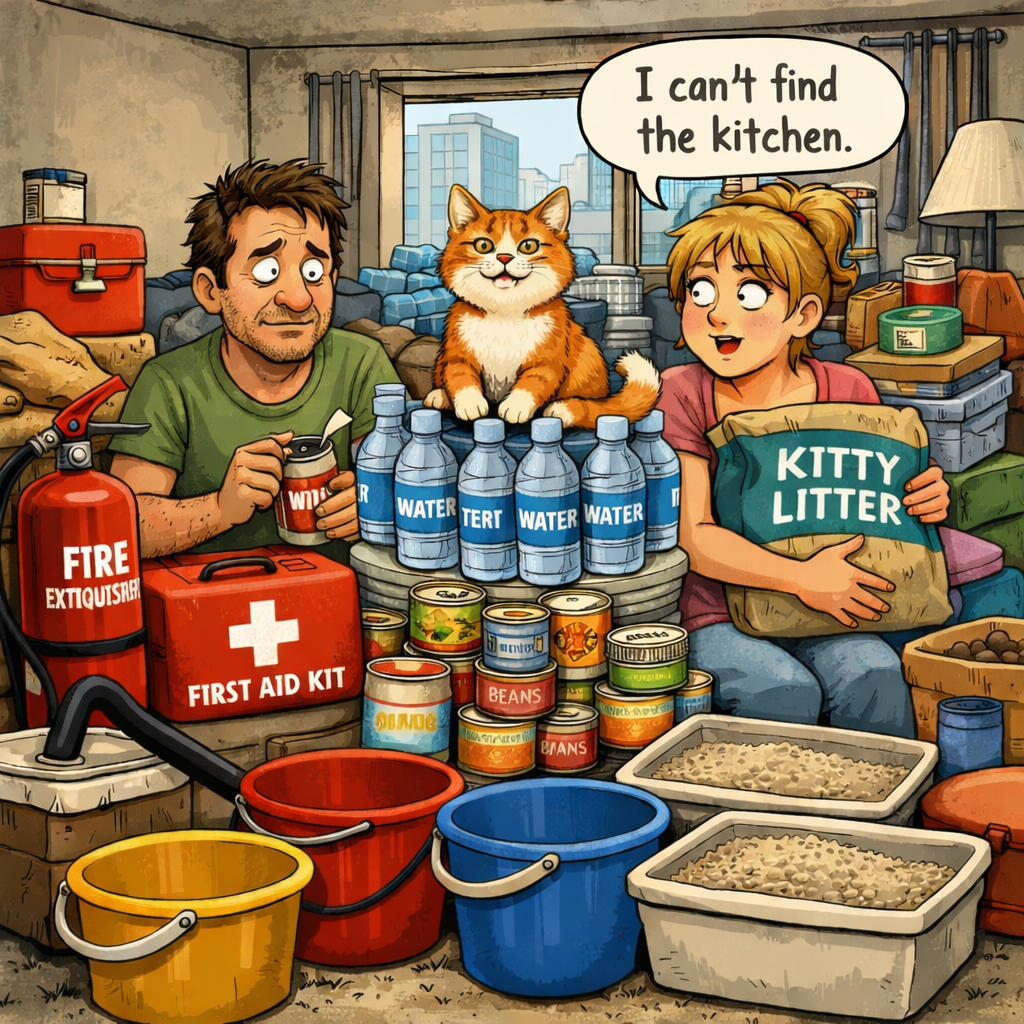
If we have to ‘shelter at home’ in our apartment buildings, everyone will need water, buckets, tools, powerbanks, food, blankets, first aid things, cat and dog food etc etc - but not everyone will be able to fit all these things into our individual, and often very small, apartments
So wouldn’t it be great if every building’s community of residents did some emergency readiness planning so that everyone can be a little bit more prepared to ‘get through’, for example:
by having a bag of shared tools and supplies available on each floor
by having ways to know more about our neighbours (are they home? would they need help?)
and by generally knowing more about the building so we know how to contact key people (such as our building manager and Body Corporate committee)
and … even knowing the basics such as how to switch off our water and power if we need to!
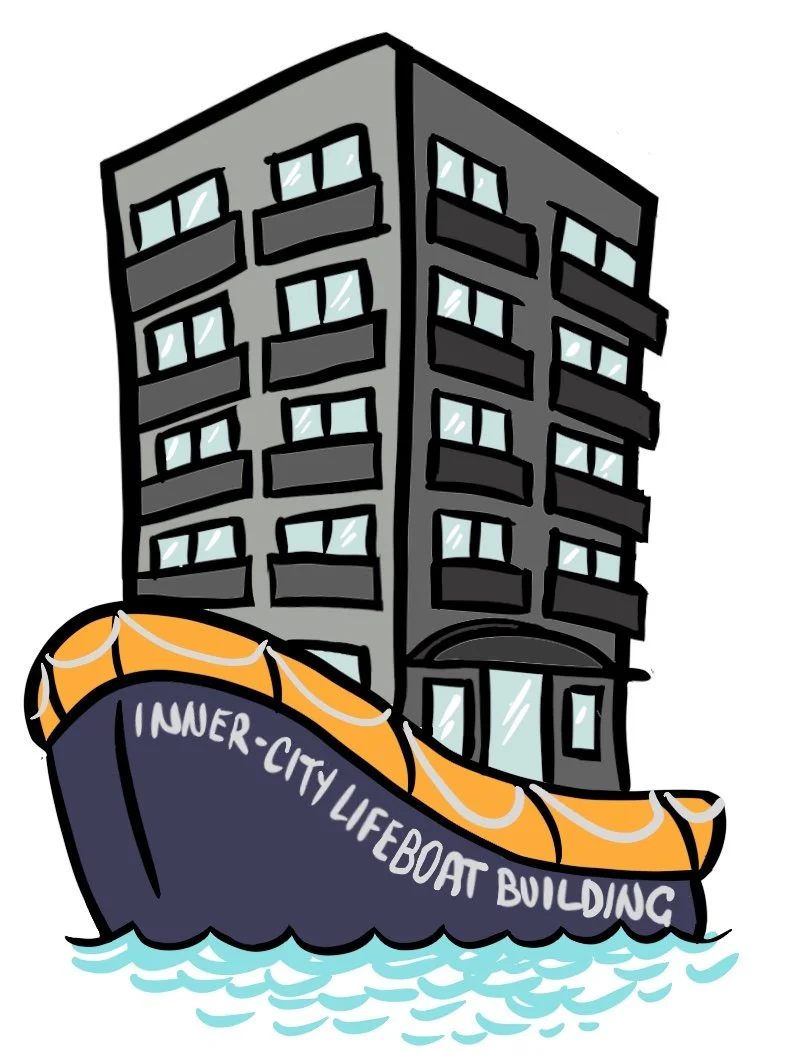
That’s what ‘Lifeboat Buildings’ is all about - how can your building be a lifeboat for you in an emergency.
___________
How can we help you?
We have been working with a group of inner-city apartment building residents and this has helped us create resources that could help you and your building. For example, we can
have a coffee to discuss how to kick things off
help you survey your residents
provide a free Apartment Building Emergency Readiness Plan template that your Body Corporate Chair and Committee can adapt
offer ideas for what to put into a per floor ‘emergency floor kit’ bag
consider suppliers who might offer discounts on emergency things - such as buckets!
share suggestions about collapsible storage containers and buckets that might be great for small apartments
share ideas about where you might be able to store emergency water and equipment
tell you about some things the emergency services say might help them.
___________
Resources to get you started
Complete this ‘How Much Do I Know About My Building’ questionnaire to see if you have any gaps in your knowledge.
Download this ‘Lifeboat Buildings Information Sheet’ and share it with your body corporate committee, building manager, and/or neighbours to start some conversations
Download this ‘Ideas for a Per Floor Emergency Readiness Kit’ to help you with your thinking.
Download and adapt our Building Emergency Readiness Plan template (Word doc) to get you started on your own building’s plan.
We’re here to help - get in touch because we love talking about this.
Contact us: innercitywellington@gmail.com
___________
The Background
17,000 of us live in ‘our patch’ - inner-city Wellington – many in our over 125 apartment buildings.
That’s a lot of people living in places that, unlike our leafy suburbs, are sometimes small, and have restricted entry access and isolated living. When the big one hits - or adversity arrives - what have we done to help ourselves - and each other – to be ready? Some apartment buildings can be home for over 100 people - if an emergency hits, we might find that we need to help each other to get through.
___________
What does ICW want to achieve with ‘Lifeboat Buildings’
Resilient Residents.
We want to help apartment building residents to consider what they can do - individually and together - to be better prepared for an emergency. This includes residents thinking about things like:
who lives here? ways to get to know my neighbours - on my floor and in the building - and if any have special needs that might mean they need extra help in an emergency (eg: mobility, power to medical equipment etc)
what to store? how much food, water, resources and tools do I need to store in my apartment if I need to stay in place for seven days (eg: food, water, buckets, batteries, first aid supplies, fire extinguishers, tools, torches, carry cases for pets etc)
can we share? can my neighbours and I share some of these supplies (eg: a set of shared tools such as crowbars, torch, rope, power packs etc)
extra storage? where - on my floor or in my building - could supplies be stored if my apartment is too small to hold everything I will need (eg: is there a supply cupboard? could an emergency supplies locker be added on the floor? etc)
do I stay or do I go? planning and practising what to do in an emergency (eg: do I stay or do I go? and if I go, where would I go?)
what’s in the neighbourhood? what buildings in my immediate area might be places for supplies or shelter (eg: local church hall, local diary, local retailers with space, other apartment buildings)
how to power? what alternative power supplies could I have (eg: powerpacks, batteries, solar power, wind-up, EV car network and chargers etc)
And
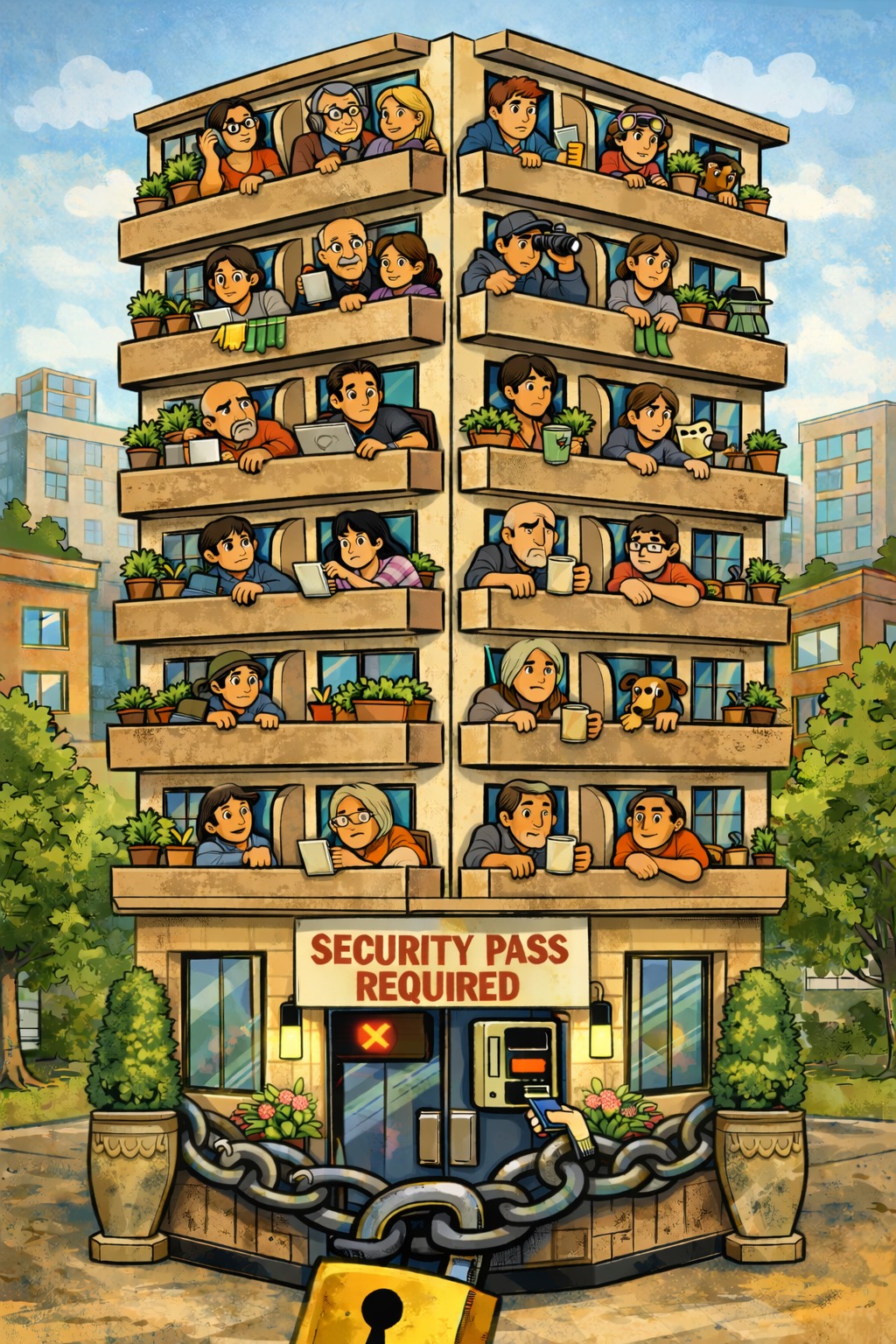
how can they get in (to help me)? how emergency services can reach me if I need help - because swipe cards may be needed to open my building’s secure front door, use the lifts and access my floor.
_____________
Supporters
Neighbourhood Support
We think that Neighbourhood Support’s experience, infrastructure and resources is a great fit for Lifeboat Buildings.
Emma McGill, Senior Area Coordinator | Greater Wellington Neighbourhood Support
explains the resources and infrastructure that Neighbourhood Support can offer:
If you were to start a Neighbourhood Support group for your floor or building you would have the following:
a group of your neighbours to connect/ engage/ support with
registration on our database which allows us to connect those needs and wants within your building in the event of emergency/need (e.g who needs physical help/ who has what resources)
a monthly newsletter from Neighbourhood Support with crime states, local info and events.
a coordinator with whom to engage and help initiate any projects you may be interested in running in your building/ with your community.
help in building resilience plans with key partners
a general sense of wellbeing - we know that connected neighbours feel safer, less isolated and have a greater sense of engagement.
_____________
WREMO (Wellington Regional Emergency Management Office)
We have been working with WREMO to ensure they consider how their advice and resources match the realities of apartment living. For example, WREMO is drafting an emergency guide specifically tailored for residents in apartment buildings and we will be facilitating input from residents so that it fits the needs.
_____________
Wellington City Council
We are in touch with the Emergency Manager of the Council’s Emergency Management team. They work closely with WREMO to plan for an inner-city event. This includes creating a Central City Plan, and running emergency scenarios and exercises.
____________
Contact us: if you live in an inner-city apartment building and/or are interested in knowing more - we’d love to have a coffee with you.
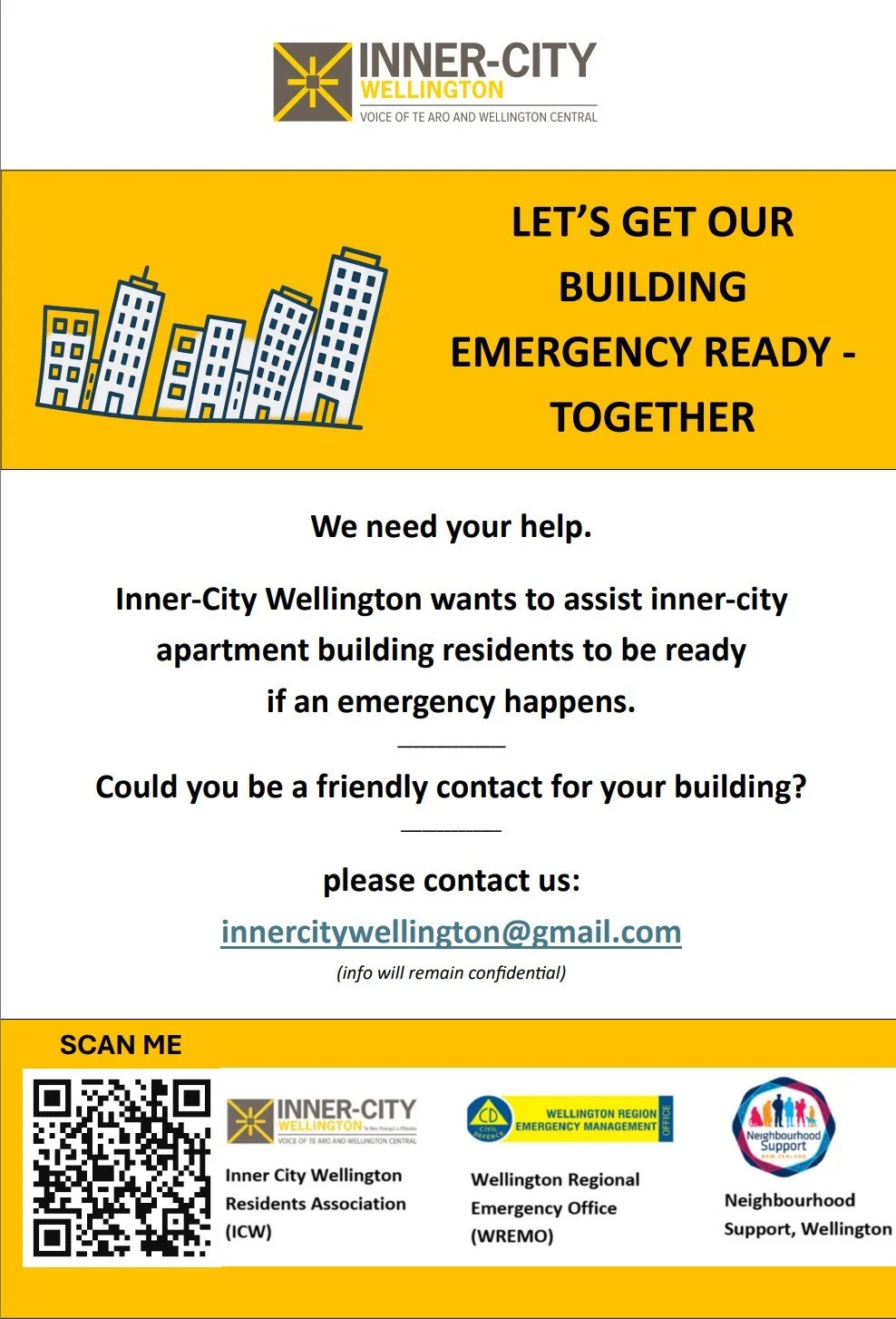
You might have seen this poster on your apartment building door?
We’d love to hear from you!
This poster is popping up across the inner-city because ICW has been out and about this year to see if we can build up our list of contacts in the over 125 apartment buildings in ‘our patch’ of Te Aro and Wellington Central.
Lifeboat Buildings is all about this:
“how could your apartment building be a lifeboat for you if you and your neighbours had to ‘shelter at home’ for 7-10 days, possibly with no power or water, after an emergency event?”